Welcome 🤗! In the next ~4h we will cover:

The word string has been used to mean any items arranged in a line, series, etc, for centuries.
Auckland Museum, CC BY 4.0 Source
Motivation
Strings: We use strings to input/output data to/from the computer. A programming language requires functions to process language.
Formatted IO: We need functions to present the results in a user-friendly way (can be either a human or a computer).
Learning goals
Use common strings functions like concatenation, searching, transformation
Input and output formatted strings using
sprintfandsscanfSplit on tokens using
strtok_rorstrsepDefine an array with an element counter
Explain how
putcharand other IO functions likeprintfcan be used in a microcontroller which does not necessarily have a terminal
Preparation Review
E: Teach your peers
Coding
String operations
Formatted string IO
Tokenize
E: Reflection
Let us revisit our learning goals:
Use common strings functions like concatenation, searching, transformation
Input and output formatted strings using
sprintfandsscanfSplit on tokens using
strtok_rorstrsepDefine an array with an element counter
Explain how
putcharand other IO functions likeprintfcan be used in a microcontroller which does not necessarily have a terminal
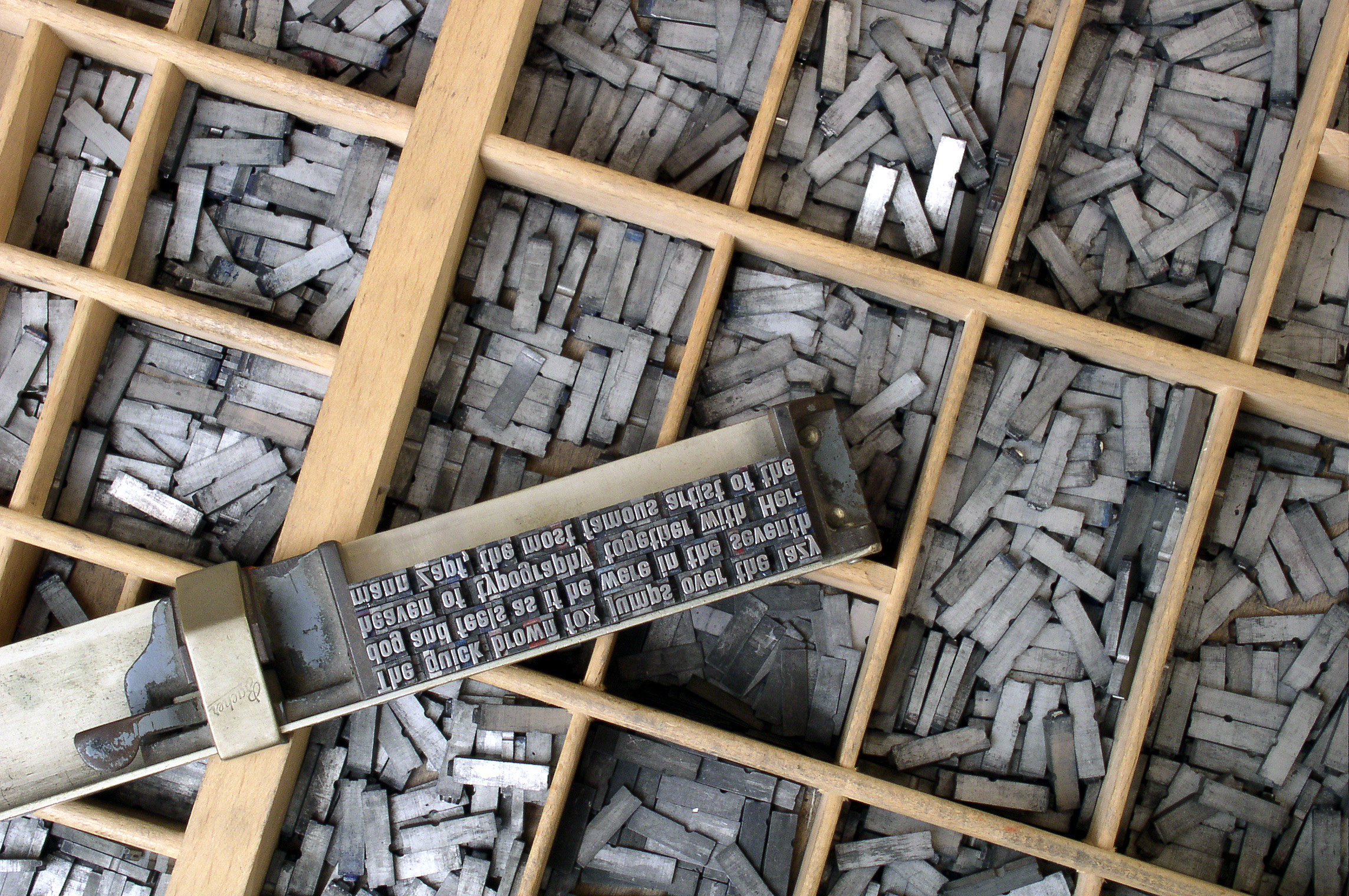
A type case and typeset matter in a composing stick. You don’t need a stick to format text.
Willi Heidelbach, CC BY-SA 3.0 Source