Welcome 🤗! In the next ~4h we will cover:
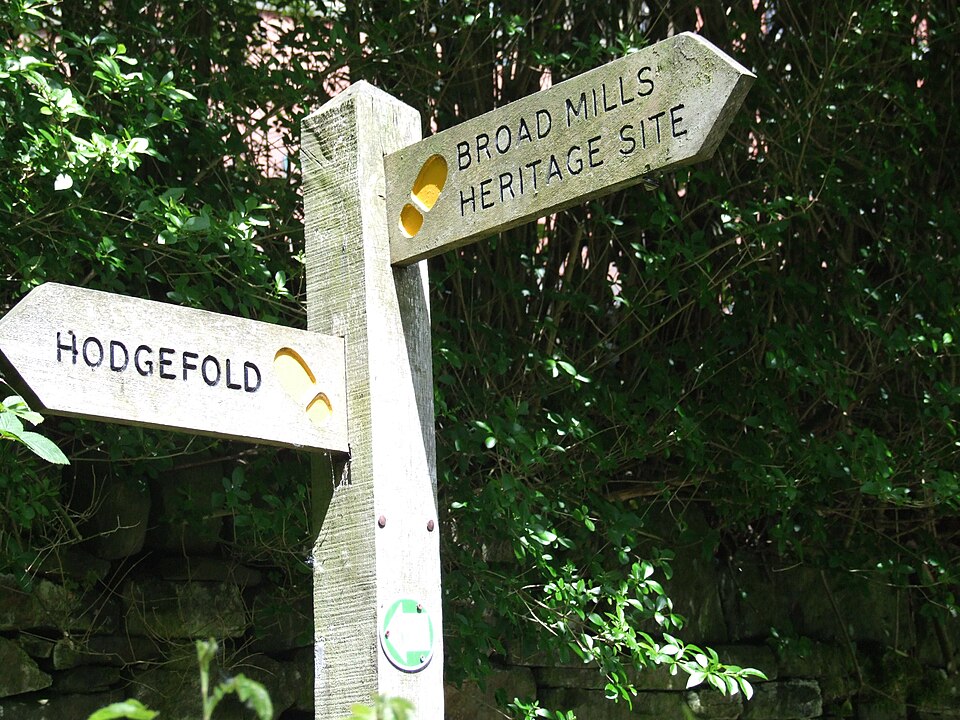
Footpath signs, Clem Rutter, CC BY-SA 3.0, Source
Motivation
Every value in computer memory lives at an address, like a house on the street. Often you don’t want the value itself. You want to know where it is, so you can find it later, share it with another part of the program, or change it in place.
- pointer
a variable whose value is a location in the computer’s memory. Pointer (computer programming)
Learning goals
Explain the motivation for pointers
Define and use pointers including
*and&operatorsPass arguments to functions by reference, write functions that accept pointers
Differentiate between constant pointers and constant values based on the
constsyntaxUse
sizeofoperatorExplain the role of pointers in arrays and strings
Preparation Review
Code without main
In the following you will see code snippets like this:
#include <stdio.h>
int i = 42;
i
(int) 42(int) 42 means that the variable i is of the type int and has the value 42. These code cells are simplified programs without main and printf for teaching purposes [1]
E: Teach your peers
Question pool
Coding
Hello pointer
Pointærray
Arrays as arguments
E: Reflection
Let us revisit our learning goals:
Explain the motivation for pointers
Define and use pointers including
*and&operatorsPass arguments to functions by reference, write functions that accept pointers
Differentiate between constant pointers and constant values based on the
constsyntaxUse
sizeofoperatorExplain the role of pointers in arrays and strings
These interactions are based on the
clang-replprogram, which is like a shell for the C++ language or REPL.clang-replprogram does not seem to be part of the compiler package we installed on Windows. It may be available in theLLVM.LLVMpackage, which I did not test.To generate the results on this website I use a plugin that runs
clang-replin the background: Jupyter notebook running a Clang-Repl-based kernel. I use them there to explain how code works.The book has 200 pages, each page about 200 words, and each word has about 5 letters. If we also account for the spaces between letters, the content would correspond to about .